
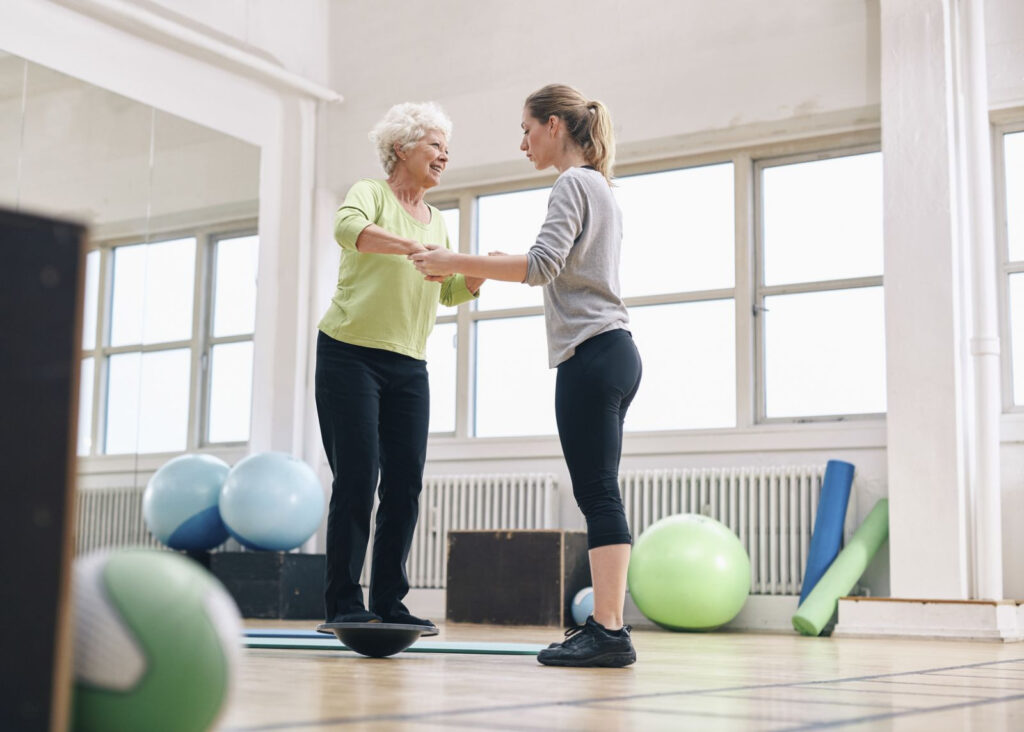
Co-Written by Connie Colleen Wyatt, Occupational Therapist, and Holly Berard
Balance is one of those things we rarely notice… until it starts to slip.
It shows up quietly at first: a hesitation on the stairs, reaching for the wall while putting on shoes, or that moment of “whoa” when stepping off a curb. These small changes might seem harmless, but they can be early signs of something that plays a major role in aging safely at home.
For those aging in place—and the adult children supporting them—balance is a key piece of bulletproof aging. It directly impacts mobility, confidence, and independence.
And no, you don’t have to stand on one foot while brushing your teeth (unless you want to impress someone).
Balance Is More Than Just Not Falling
When we think about balance, we often think about preventing falls—and that’s important. Falls are one of the leading causes of injury in older adults.
But balance is also about how confidently someone moves through their day.
Good balance allows a person to:
• Walk safely on different surfaces
• Turn, reach, and bend without fear
• Navigate stairs and curbs
• Carry items without feeling unsteady
When balance declines, people often start to limit their activities. They may walk less, avoid stairs, or stop going out as much. Over time, this can lead to decreased strength, reduced social engagement, and loss of independence.
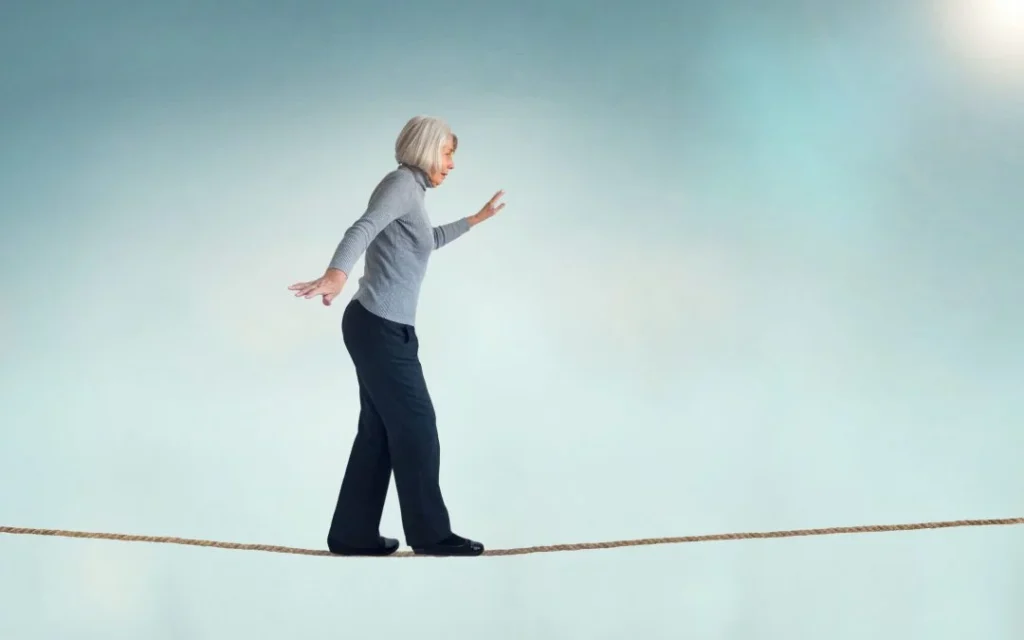
Balance Is Trainable (At Any Age)
Here’s the encouraging part: balance is a skill that can be improved.
It relies on a combination of strength, coordination, vision, and body awareness—all of which can be supported through targeted movement and strength training.
Research shows that balance and strength exercises can significantly reduce fall risk and improve functional ability in older adults (Sherrington et al., 2019).
That doesn’t mean hours at the gym. It can be as simple as:
• Practicing standing on one leg while holding onto a counter
• Strengthening the legs with sit-to-stands
• Walking on different surfaces
• Improving posture and core strength
Small, consistent efforts add up—and often faster than people expect.
Confidence Is Half the Battle
One of the most overlooked aspects of balance is confidence.
After a near-fall (or an actual fall), many older adults become more cautious—and understandably so. But that caution can turn into fear, which often leads to less movement.
Less movement → less strength → poorer balance → higher fall risk.
It’s a frustrating cycle.
Improving balance isn’t just about physical ability—it’s about rebuilding trust in the body. Feeling steady again can open the door to more activity, more independence, and more participation in daily life.
Where Occupational Therapy Comes In
This is where occupational therapy can make a real difference.
Occupational therapists don’t just look at balance in isolation—they look at how it affects everyday life. The goal is to help people safely do the things that matter to them, whether that’s cooking, gardening, or simply moving around the home with confidence.
An occupational therapist might:
• Assess fall risks within the home
• Recommend simple environmental modifications (like grab bars or better lighting)
• Incorporate balance and strength into daily activities
• Teach strategies for safer movement during everyday tasks
• Help rebuild confidence after a fall
It’s not about turning someone into an athlete—it’s about helping them move through life safely and independently.
The Bigger Picture
Balance is one of those foundational skills that supports everything else: movement, strength, confidence, and connection.
Programs and communities like the Strength in Aging Squad often emphasize how strength and balance work together to keep people active and independent for as long as possible.
Because at the end of the day, aging well isn’t just about avoiding falls.
It’s about continuing to move through your life—your home, your routines, your relationships—with confidence.
And maybe even opening that pickle jar without needing backup.
C²
connie@pnwhomeforlife.com
360-770-1752
Discover more from PNW Home For Life
Subscribe to get the latest posts sent to your email.