

Co-Written by Connie Colleen Wyatt, Occupational Therapist, and Holly Berard
Staying active as we age doesn’t have to mean heavy dumbbells, marathon training, or complicated yoga poses that look more like modern art. For seniors, especially those aging in place, movement is about keeping your body strong, flexible, and independent—and having a little fun along the way never hurts. Occupational therapists often encourage small, sustainable ways to integrate activity into daily life, and research shows that even gentle, consistent movement can significantly improve health and quality of life (Taylor et al., 2014).
Here are some super simple exercises anyone can do at home, no special equipment required:
1. Chair Marches
Sit tall in a sturdy chair and lift your knees one at a time, like you’re marching to your favorite tune. It might look silly—and that’s okay—but chair marches help improve circulation, balance, and leg strength, all crucial for preventing falls. Bonus: you can march while catching up on your favorite TV show, so multitasking never felt so heroic.
2. Wall Push-Ups
Stand facing a wall, place your hands on it at shoulder height, and gently bend your elbows to bring your chest toward the wall, then push back. Wall push-ups are an excellent way to strengthen the upper body without stressing the shoulders or wrists. It’s like regular push-ups, but without the dramatic floor encounter.
3. Heel Raises
While holding the back of a chair for support, rise up onto your toes, hold for a second, and slowly lower. Repeat 10–15 times. This simple move strengthens the calves and ankles, supporting balance and walking confidence. And let’s be honest—who doesn’t want a little extra bounce in their step?
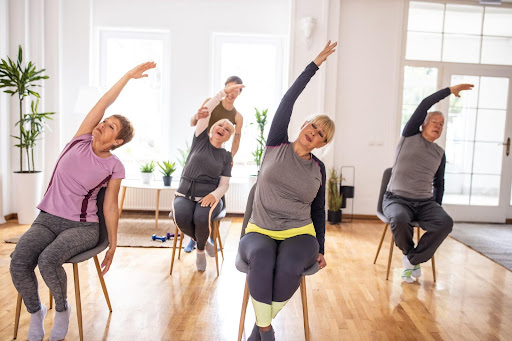
4. Seated Side Stretches
Sit tall, lift one arm over your head, and gently lean to the opposite side. Switch sides. This keeps the spine flexible, shoulders loose, and helps prevent stiffness from long periods of sitting. Stretching also doubles as a great excuse to practice your dramatic “reach for the stars” pose.
5. Finger and Wrist Exercises
Even tiny movements matter. Open and close your fists, rotate your wrists, or try gentle finger stretches while watching TV or waiting for your coffee to brew. These movements maintain dexterity for daily tasks, from opening jars to typing on a tablet.
⸻
Why Movement Matters for Aging in Place
Every step, stretch, or lift—even small ones—supports strength, balance, and independence, which are core principles of “bulletproof aging.” Strength training, cardiovascular activity, and flexibility exercises have been shown to reduce the risk of falls, improve mood, and even enhance cognition (Nelson et al., 2007). Plus, movement can be fun and social, especially if you involve friends, family, or even a playful pup in the routine.
Occupational therapists can help seniors and their adult children identify safe and enjoyable exercises tailored to specific abilities, suggest modifications for chronic conditions, and provide strategies to integrate movement into daily routines, so exercise isn’t a chore—it’s a lifestyle.
For those who want a little extra motivation and community, programs like the Strength in Aging Squad focus on practical, evidence-based activities for older adults. The goal isn’t to become the next Olympic sprinter—it’s about helping seniors stay strong, confident, and independent in the places they love most: their homes.
⸻
The Bottom Line
Movement doesn’t have to be intimidating. With a few simple exercises sprinkled throughout the day, seniors can improve strength, flexibility, and balance—without ever feeling like they’ve joined a boot camp. And with guidance from occupational therapists, families can ensure these exercises are safe, effective, and even enjoyable. Remember, aging in place is all about maintaining independence, having fun, and maybe sneaking in a dance break when no one’s watching.
C²
connie@pnwhomeforlife.com
360-770-1752
Discover more from PNW Home For Life
Subscribe to get the latest posts sent to your email.