

Co-Written by Connie Colleen Wyatt, Occupational Therapist, and Holly Berard
One of the most powerful parts of my work is walking alongside people who refuse to let an injury define what’s possible.
I’m currently working with a young-aging gentleman who sustained a partial spinal cord injury during a fishing trip. Like many people navigating SCI, his journey has involved sudden change, uncertainty, and hard work — but what stands out most is his resilience. He is deeply invested in his recovery, actively researching emerging therapies and asking thoughtful questions about how to regain strength and function.
With his full permission, we’ve decided to trial Blood Flow Restriction (BFR) training over the next several weeks, focusing on upper-body strength and motor control, while closely monitoring his response.
What Is Blood Flow Restriction (BFR)?
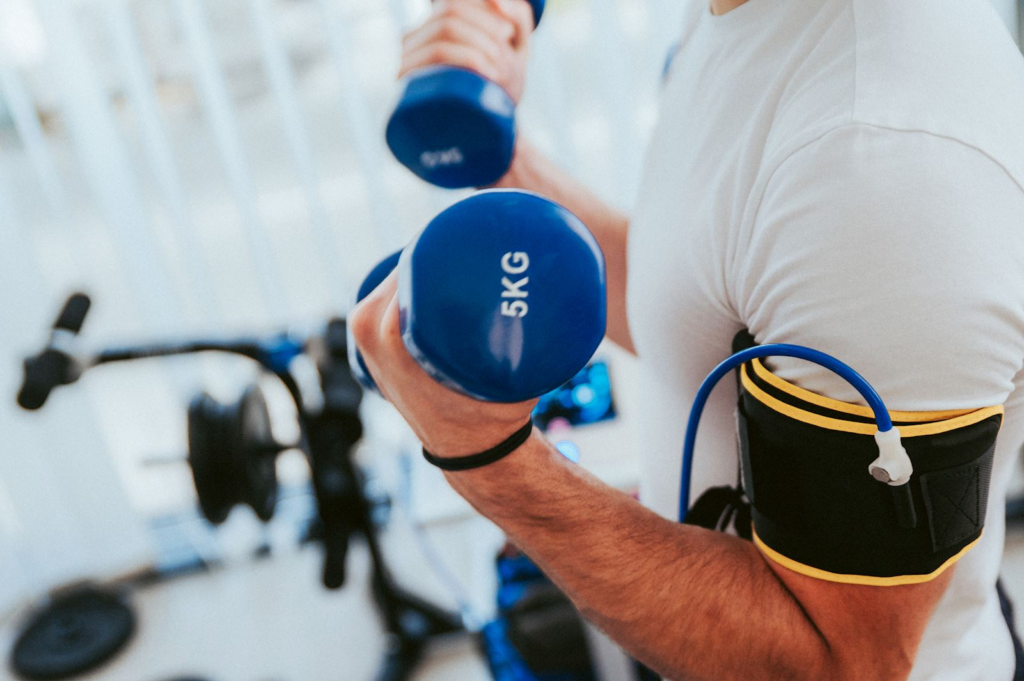
Blood Flow Restriction training involves applying specialized cuffs or bands to partially restrict venous blood flow during low-load exercise. This creates a metabolic environment that can stimulate muscle strength and hypertrophy similar to high-intensity training — but with far less mechanical stress.
This makes BFR especially relevant for individuals with spinal cord injuries, where traditional high-load resistance training may not be feasible or safe.
What the Research Is Telling Us About BFR and SCI
Although research on BFR in spinal cord injury is still emerging, early findings are encouraging.
BFR Combined With Routine Rehab May Improve Strength and Function
A 2025 study examined individuals with SCI who completed 12 weeks of traditional rehabilitation, with one group also performing BFR training following surgical decompression.
Compared to rehab alone, the BFR group demonstrated:
- Greater strength gains in hip, knee, and ankle muscles
- Improved motor scores
- Better performance in activities of daily living (ADLs)
- Increased lower-limb muscle size
- No increase in adverse events
These findings suggest that BFR may be a feasible and beneficial addition to standard rehabilitation for motor recovery after SCI, while reinforcing the need for continued research.
Low-Intensity BFR Shows Strength Improvements in SCI
In a pilot study led by Dr. Babak Shadgan, individuals with chronic cervical and thoracic SCI completed an 8-week low-intensity BFR program targeting the forearm muscles.
Key outcomes included:
- Significant strength gains in the BFR-trained limb compared to the non-BFR control side
- Improvements in everyday functional tasks
- High participant satisfaction
The researchers concluded that low-intensity BFR may serve as a safe and promising alternative to conventional strengthening, particularly when high-load training isn’t possible.
Broader Neurological Benefits
A comprehensive review examining BFR across neurological conditions — including SCI — reported potential improvements in:
- Sensorimotor function
- Muscle thickness
- Gait speed and walking endurance
- Cardiovascular response to exercise
- Perceived exertion
- Quality of life
The authors appropriately note that current studies are limited in size and methodology, but the consistent functional trends point to BFR as a valuable rehabilitation tool worth continued exploration.
Feasibility and Safety Matter
Safety is always the priority. Current evidence suggests that low-load BFR is feasible and well-tolerated in individuals with incomplete SCI, with no significant cardiovascular complications when performed under professional supervision. While larger trials are still needed, early data supports the clinical safety of BFR when applied carefully by trained clinicians.
Why We’re Trialing BFR Now
For my client, BFR represents an opportunity to:
- Stimulate muscle activation where voluntary control is present
- Build strength without excessive joint or spinal stress
- Support functional gains during a critical recovery phase
This trial isn’t about chasing a trend — it’s about thoughtfully integrating emerging evidence with individualized care, ongoing assessment, and respect for the body’s healing process.
His willingness to explore new approaches, ask questions, and stay engaged in his rehabilitation is a reminder that recovery is not passive — it’s collaborative.
I look forward to sharing updates as we continue this journey together.
C²
connie@pnwhomeforlife.com
360-770-1752
Discover more from PNW Home For Life
Subscribe to get the latest posts sent to your email.

