
By C², Connie Colleen Wyatt, Occupational Therapist, and Holly Berard
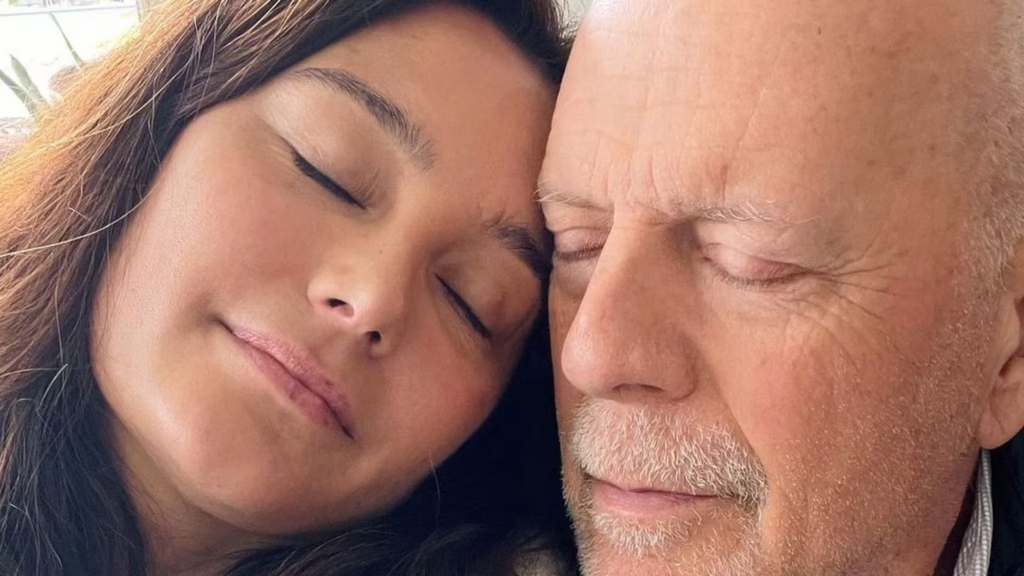
When Emma Heming Willis opened up about her husband Bruce Willis’s dementia journey, millions of people paid attention—not because they’re celebrities, but because the story she told is heartbreakingly familiar.
For every famous family navigating dementia, there are thousands of families quietly living the same confusion, grief, fear, and fierce love. And Emma’s honesty in an AARP magazine interview gives voice to something care partners feel long before they have the language for it:
“Something is changing, and I don’t know what it is—but I know it’s real.”
The Quiet Shift No One Prepares You For
Emma described noticing subtle changes long before a diagnosis:
- pulling back in conversations
- forgetting words
- behavioral shifts
- a sense that something was just… off
This is how dementia enters most lives—not with a dramatic moment, but with a small ache of recognition that the person you know is slipping, inch by inch, into someone new.
Frontotemporal dementia (FTD), the type affecting Bruce, is especially cruel. It often affects behaviour, personality, language, and communication long before memory issues appear. It’s unpredictable. It’s misunderstood. And it reshapes relationships in ways most people can’t imagine unless they’ve lived it.
Caregiver? Or Care Partner?
Emma shared that she began using the term care partner, a phrase she embraced after learning it from dementia expert and OCCUPATIONAL THERAPIST, Teepa Snow. (we love our famous OTs!)
And she’s right—this journey is not one-sided.
When dementia enters a relationship, both people change. Both adapt. Both lose and rediscover each other in new ways. Care partnering acknowledges that love, connection, and shared history still exist, even when roles shift.
As an occupational therapist, I see this every week—spouses, daughters, sons, neighbours, friends stepping into care roles they never expected. They’re not “just caregivers.” They’re advocates, protectors, translators, historians, and anchors in the storm.

The Part No One Sees: Ambiguous Loss
One of the most profound parts of Emma’s interview was when she described ambiguous loss—grieving someone who is still physically here.
You’re loving two versions of the same person:
- the one you remember
- and the one dementia is shaping
It’s confusing. It’s heartbreaking. And it’s a type of grief that cycles again and again.
Families need permission to feel all of it:
the love, the fear, the anger, the gratitude, the exhaustion, the resentment, the devotion.
There is no “right” way to go through this. There is only the way that gets you through the next day.
What OT Brings to This Journey
Occupational therapy can’t cure dementia.
But it can change the experience of living with it—and caring through it.
Here’s how I help families like Emma and Bruce’s every week:

Home Modifications
Lighting, layout, clutter, exits, labels, safety cues—small changes create huge relief for both the person living with dementia and the partner trying to keep them safe.
Daily Routines That Actually Work
OT simplifies the day so care partners don’t carry everything alone—reducing frustration, decreasing behavioural flare-ups, and maintaining dignity.
Communication Strategies
When language shifts or aphasia appears, we work on ways to stay connected beyond words.
Functional Mobility & Strength
Helping the person stay independent as long as possible—and reducing the physical toll on care partners.
Support for the Care Partner
Sometimes the most important work I do is simply sitting with someone and saying:
“You’re not crazy. You’re not failing. This is insanely hard.”
Because I’ve walked beside enough families to truly understand what care partners carry—emotionally, physically, and spiritually.
You Are Not Alone
Emma Heming Willis was brave in choosing to share her story publicly. She didn’t have to. But because she did, countless other care partners now feel seen.
If you’re walking this road too, please know this:
You deserve support.
You deserve rest.
You deserve compassion.
You deserve someone to problem-solve with you, not judge you.
And you deserve to know that it’s possible to create moments of connection and safety, even in the middle of dementia’s hardest chapters.
Care partnering isn’t about perfection—it’s about staying human through the hardest love.
By C²
360-770-1752
Discover more from PNW Home For Life
Subscribe to get the latest posts sent to your email.

